
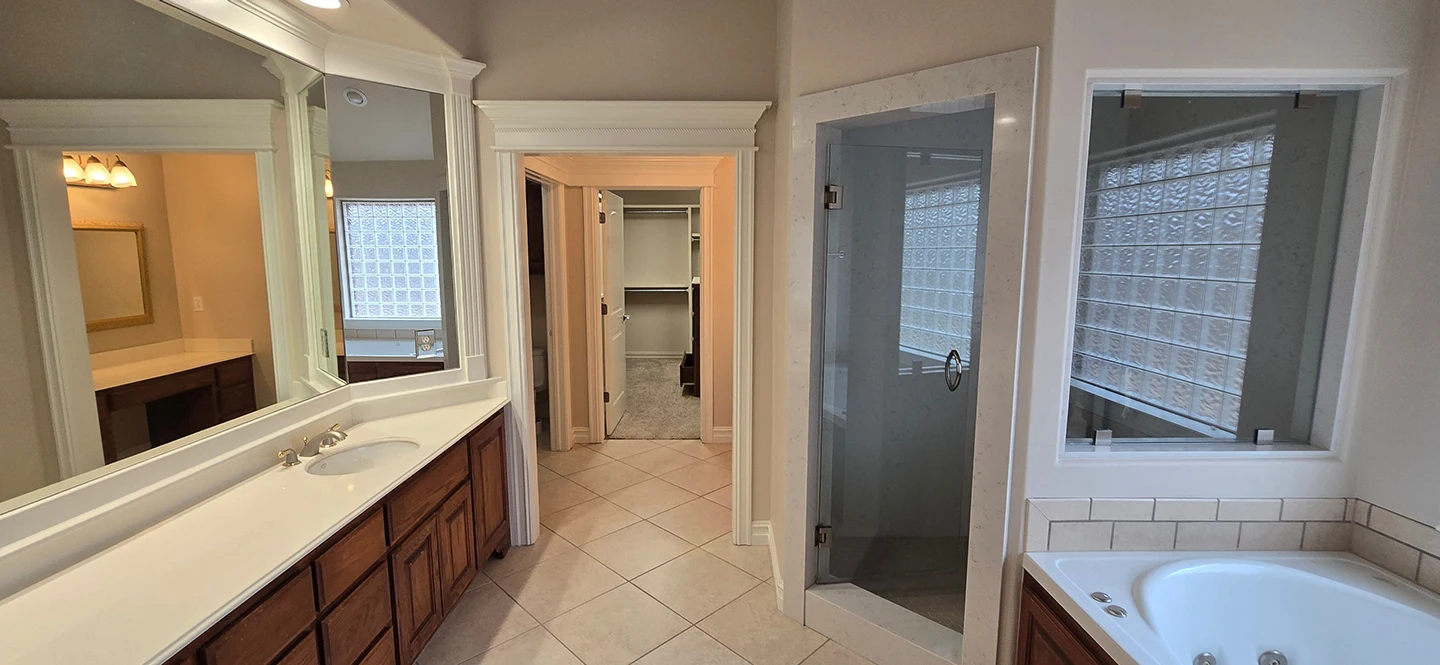
Interior painting works best as a series of room-by-room decisions rather than one choice for the whole house. Each room’s moisture, traffic, light, and daily use set the right colors, finishes, and prep for the space, which is why a bathroom and a bedroom can share a color and still need completely different paint. Handling each space on its own terms is the core of any well-planned interior house painting project.
What Determines How a Room Should Be Painted?
Four things decide how any room should be handled, and every room weighs them differently:
Moisture — kitchens, bathrooms, and laundry rooms deal with steam and splashes that call for a moisture-tolerant finish.
Traffic — hallways, entryways, kids’ rooms, and stairwells take constant contact and need a surface that cleans up without wearing through.
Natural light — the direction a room faces and the light it gets shift how a color reads from morning to night.
Who uses the space — a nursery, a home office, and a dining room are lived in completely differently, and the paint should follow suit.
Get those four right and the remaining choices for a room tend to fall into place.
How Does the Approach Differ by Room?
Every room leans on those factors in its own way.
Bedrooms
Bedroom painting is mostly about rest. Soft, muted colors and a low-sheen finish keep the room calm and quietly hide the minor wall imperfections most bedrooms collect over the years. Because a bedroom sees little abuse, mood matters more than durability here.
Kids’ Bedrooms
A child’s room flips that priority toward toughness. The best kids’ bedroom paint ideas pair colors a child actually loves with a washable, scrubbable finish that stands up to crayon, sticky hands, and furniture that moves every few months. Colors that can grow with a child for a few years also save a repaint down the road.
Nurseries
A nursery is where product safety matters most. Low-VOC nursery paint keeps fumes and odor to a minimum for a baby’s developing lungs, and finishing the room well before the due date gives it time to cure and air out. Soft, soothing colors suit the sleep the room is built for.
Living Rooms
Living rooms are the most-seen space in most homes, so living room painting comes down to colors that work with the furniture, flooring, and light already there. Versatile, forgiving tones tend to win, since the room has to flatter everything from daylight to lamplight and survive years of changing furniture.
Dining Rooms
Dining rooms invite a little more drama. Dining room painting often leans into deeper, richer tones that feel intimate under evening light and make gatherings feel warm, since the space is used less for daily traffic and more for occasions.
Kitchens
Kitchens are working rooms, and kitchen painting has to account for grease, heat, steam, and frequent wipe-downs. A durable, washable finish is essential, and the color usually has to cooperate with cabinets, countertops, and a backsplash that aren’t changing.
Bathrooms
A bathroom is a moisture problem before it’s a color choice. Bathroom painting calls for a surface that resists steam and frequent cleaning and holds up against mildew, which is why the right finish for the room matters even more here than the color does.
Home Offices
With more people working from home, home office painting has become its own consideration. Colors that support focus without feeling sterile tend to work best, and the wall behind you on video calls deserves some thought, along with how the paint reads under both daylight and screen light.
Stairwells and Hallways
These are the hardest-working, hardest-to-reach spaces in the house. Painting stairs and hallways is a durability-and-access challenge at once: the surfaces take shoulders, hands, and hauled furniture, while the heights and angles of a stairwell make a clean, even job difficult without the right setup. A scuff-resistant finish is the priority.
How Do You Keep the Whole House From Clashing?
Treating each room on its own terms raises the opposite question: how do all those rooms hang together as you move through the house? The answer is a coordinated palette — a set of colors that share undertones so the spaces feel related even when they aren’t the same. Landing on those specific shades is its own decision, and it starts with knowing how to choose interior paint colors that carry cleanly from one room to the next.
Ready to plan your whole-house palette?
Contextual CTA, right where the coordination question comes up.
Frequently Asked Questions About Painting Room by Room
Should every room be the same color?
Can you use the same finish throughout the house?
Which rooms need the most durable paint?
Is it better to paint the whole house at once?
Ready to Take It Room by Room?
A whole-house repaint is really a series of small, room-specific decisions, and getting each one right is the difference between a home that flows and one that feels pieced together. We help homeowners across the entire Tulsa metropolitan area plan projects exactly this way, matching the color, finish, and prep to how each room is actually lived in. Based in Broken Arrow, fully insured, and standing behind our work with a two-year workmanship warranty, we’ll walk your home with you one room at a time. When you’re ready, reach out for a free estimate and we’ll map out a plan that fits the whole house.