
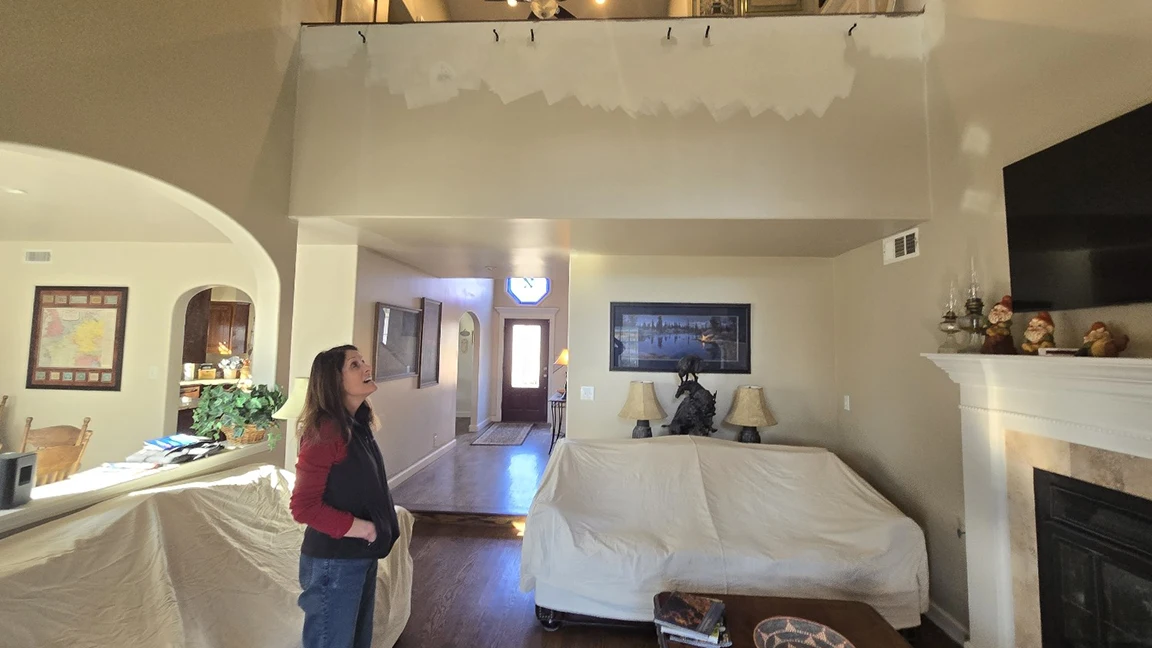
Interior paint prep is everything that happens before the first coat goes on — cleaning, repairs, sanding, caulking, priming, and protecting the room. A professional crew handles most of that work, while the homeowner’s part is a short list that clears the way and keeps belongings safe. Prep is the stage that decides how a finished interior house painting project looks and how long it holds up, so it earns attention before painting day arrives.
Does Paint Prep Really Matter?
Yes — prep decides the outcome more than almost any other part of the job. Paint can only bond to a surface that’s clean, sound, and smooth, so when the groundwork is skipped, even the best paint will peel, crack, or telegraph every flaw underneath within months. Proper wall prep before painting is what separates a finish that lasts years from one that disappoints by the next season. It’s also the part that’s easiest to rush and the most expensive to fix after the fact.
What Does Professional Interior Paint Prep Include?
Professional paint prep covers more ground than most people picture. Before the first coat goes on, a crew handles each of these:
Cleaning — surfaces are washed free of dust, grease, and grime so the new paint grips instead of sitting on a film.
Repairs — nail holes, dents, cracks, and damaged drywall are filled and patched flush with the wall.
Sanding — patched spots and any glossy or rough areas are sanded smooth so nothing shows through the finish.
Caulking — gaps along trim, baseboards, and corners are sealed, which is what produces sharp, clean paint lines.
Priming — bare, patched, and stained spots are sealed first; whether you need to prime before painting depends on the surface, and a crew makes that call spot by spot.
Protection — floors, trim, and furniture are masked and covered, because protecting furniture when painting is as much a part of the job as the painting itself.
How Do You Prepare a House for Interior Painting?
Preparing for professional painters takes far less than most homeowners expect. The crew handles the heavy lifting — moving large furniture, covering floors, and removing outlet and switch plate covers — so the homeowner’s list stays short:
Take down what you want kept safe — framed photos, mirrors, and floating shelves are best stored yourself rather than left for a crew to handle.
Clear small and breakable items — lamps, décor, and anything that could tip or shatter should come off surfaces and out of the room.
Unplug and move electronics — TVs, computers, and consoles are easier to protect once they’re disconnected and set aside.
Secure pets — a closed-off room or a day away keeps animals safe and out from underfoot while doors are open and paint is wet.
Flag anything delicate or valuable — antiques, custom fixtures, and irreplaceable pieces should be pointed out before the crew starts.
Settle any undecided colors — confirming the final color and finish before painting day keeps the project from stalling midway.
Do You Have to Move Furniture When a Room Is Painted?
You don’t have to move large furniture out of a room to have it painted. Homeowners clear the small, breakable, and personal items, and the crew moves heavy pieces to the center of the room and covers them with protective sheeting before any paint comes out. In most rooms the furniture never leaves; it just gets shifted and draped for the day.
How Long Does Paint Prep Take?
Prep time tracks the condition of the walls. A room in good shape might take an hour or two to prep, while one that needs significant patching, caulking, or priming can take as long as the painting itself. That front-loaded time is exactly why a rushed prep shows up later in the finish — thorough groundwork is slower on day one and far cheaper than a repaint down the line.
What Should You Decide Before Painting Day?
Prep is on the crew, but two decisions stay with the homeowner, and both go more smoothly settled before painting day than sorted out while the crew waits: the color and the finish. The color sets the look of a room, while the finish — flat, eggshell, satin, or semi-gloss — sets how the paint cleans and holds up, and the best choice shifts from one room to the next. Settling on interior paint colors that work across the house and the right interior paint finish for each room before the crew arrives keeps the project moving instead of stalling midway.
Still deciding on color or finish?
We help homeowners weigh both when we come out for a free estimate.
Frequently Asked Questions About Interior Paint Prep
Do you have to remove outlet covers before painting a room?
Do painters remove light fixtures and ceiling fans?
Do you have to take pictures and shelves off the wall before painting?
Do you have to move furniture when a room is painted?
Do you need to wash walls before painting?
Do you need to be home while a room is being painted?
How far in advance should a room be ready for the painters?
Does interior paint prep create a lot of dust?
Ready to Leave the Prep to a Pro?
The difference between a paint job that lasts and one that fails is almost always in the prep — the cleaning, patching, and priming that happen before anyone opens a can of color. We handle that groundwork for homeowners across the entire Tulsa metropolitan area, preparing every surface as if the finish depends on it, because it does. Based in Broken Arrow, fully insured, and standing behind our work with a two-year workmanship warranty, we make getting ready the easy part. When you’re ready, reach out for a free estimate and we’ll take care of the rest.
Ready for a paint job that lasts?
Start with a free, no-obligation estimate.